
DominoThe game your family plays, with the rules your family plays by.
Everybody knows dominoes and nobody agrees on them. So every argument is a setting: who opens, what happens when you are stuck, whether a double turns the chain, what a blocked round is worth. Play Block, Draw or Kozyol against opponents that count what you have passed on — or against your friends online. No ads, no account.
Free on Windows and Linux. On the App Store, Google Play and the Mac App Store.





One game, everybody's rules
Dominoes is not one game. It is a family of them, and every kitchen table plays a slightly different member. This one lets you say which.
- 01
Forty agreements
Who opens and with what, whether there is a boneyard and how you draw from it, what a double does, when a blocked round ends, what it scores, and who wins. Change any of them, save the result as your own set, and the game says up front when two rules cannot both be true.
- 02
Opponents that pay attention
Four levels. The top two remember that you passed while the ends showed a four and a two, work out what can still be in the boneyard, and play the last few tiles out exactly rather than hopefully.
- 03
Online multiplayer
Create a private room and share the code, or hit Quick Match. Empty seats are filled with computer players, so the game always starts.
- 04
Provably fair deals
In multiplayer the server publishes a cryptographic hash of the shuffle before the deal and reveals the seed afterwards, so you can check for yourself that no hand was rigged.
- 05
Two to four players
Two, three, four — or four in two pairs sitting opposite each other, which is how Kozyol is played and how the scoring turns into us and them.
- 06
No account, no fuss
Single-player works fully offline and saves after every move, so a match survives a closed app. Multiplayer needs a nickname and nothing else.
- 07
Reads on a phone
A long chain folds to fit the screen you have, and every open end is also a button along the bottom — so on a small screen the board can be scenery and the strip can be the game.
- 08
English and Russian
Interface and rules in both languages. The game takes your device language unless you pick one yourself.
Start from a game, then argue
Three sets of rules to begin with. None of them is a category you are locked into — take any one and change anything in it.
What each of them means, and how a round is scored: read the rules →
Where to start
- Block
- the whole set dealt, no boneyard, stuck means pass
- Draw
- a boneyard to pull from until you can go
- Kozyol
- four in two pairs, 1:1 opens, 101 makes you the goat
And how the board grows
- In a line
- one chain, two ends
- Cross
- the line, then two more arms off it
- House
- all four arms from the first double
- Trains
- a train each and one for the table
Screenshots
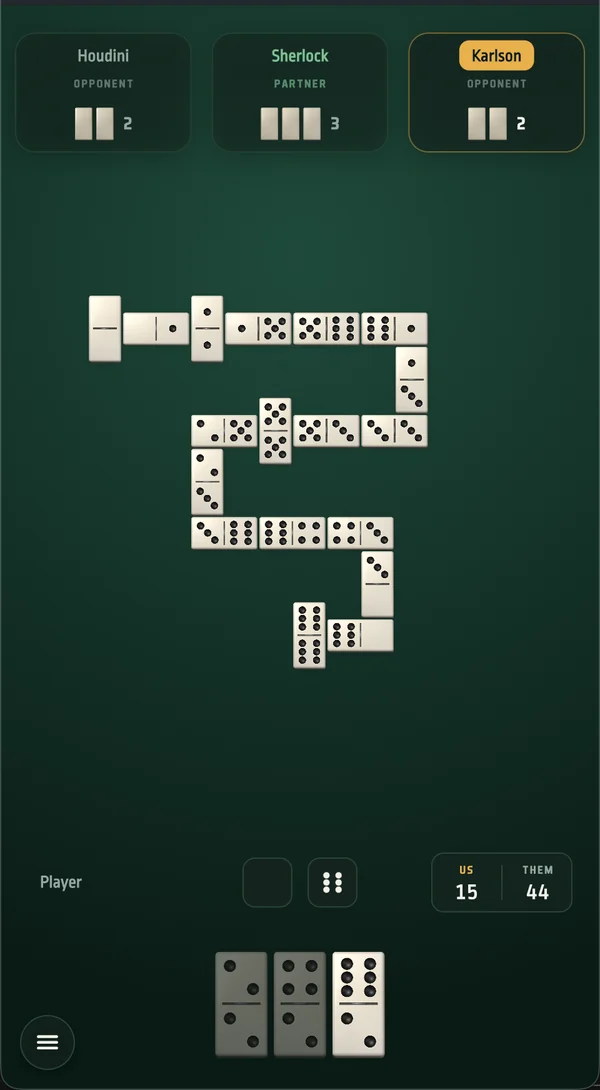
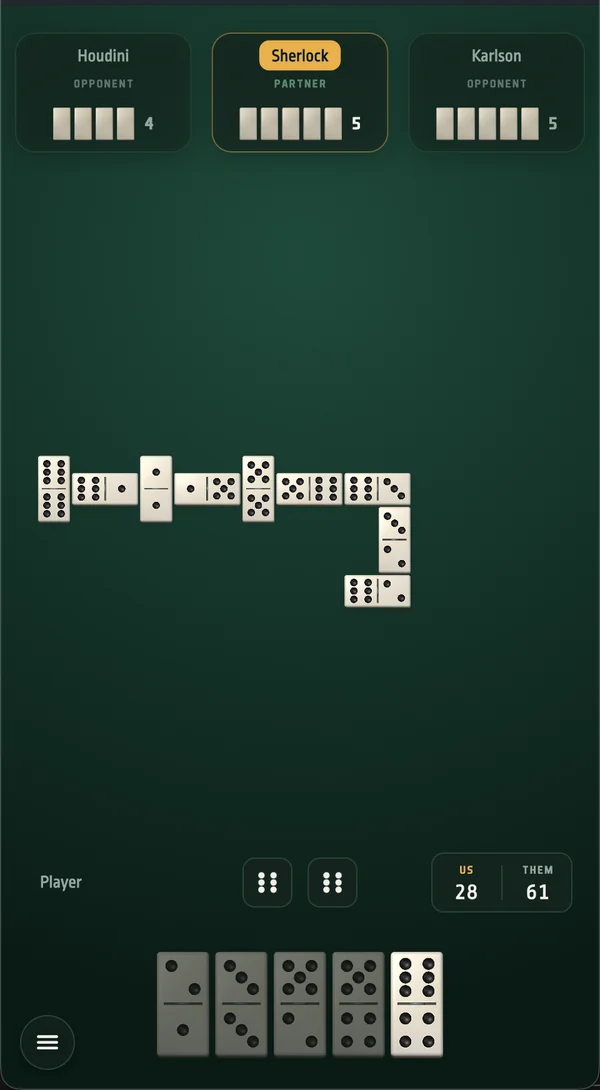
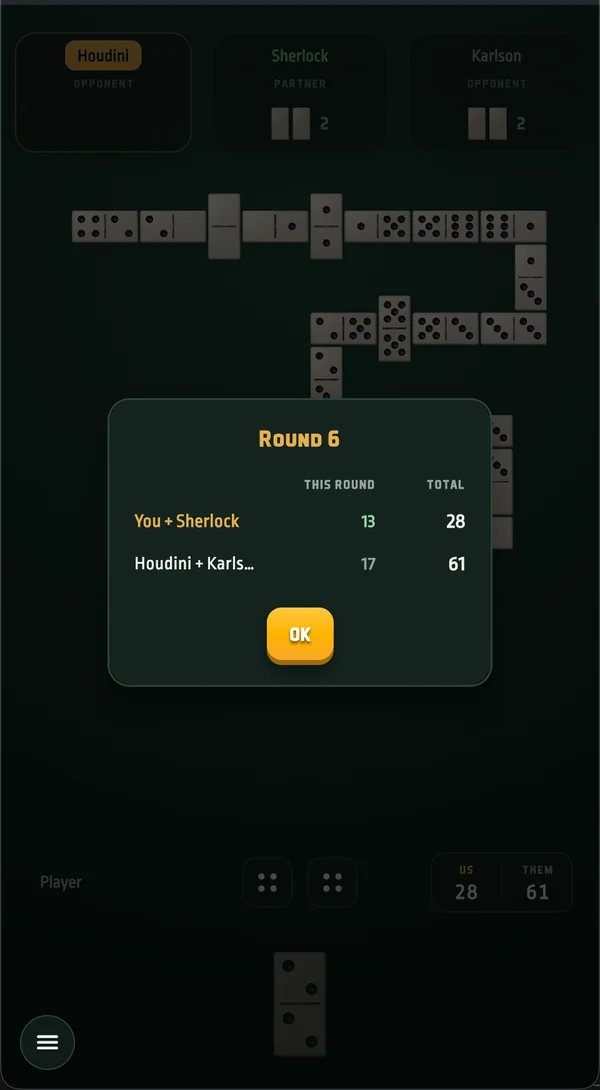
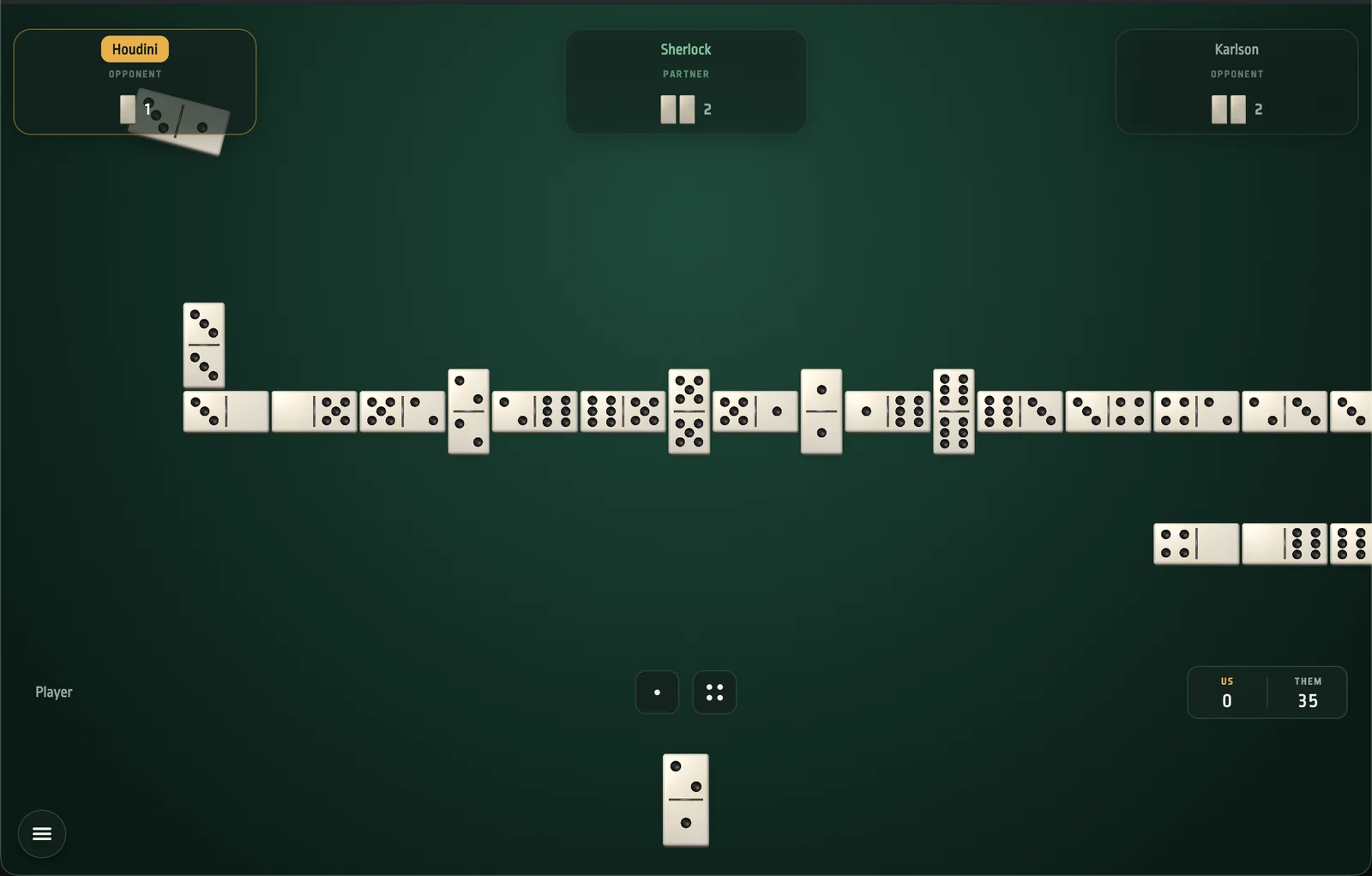
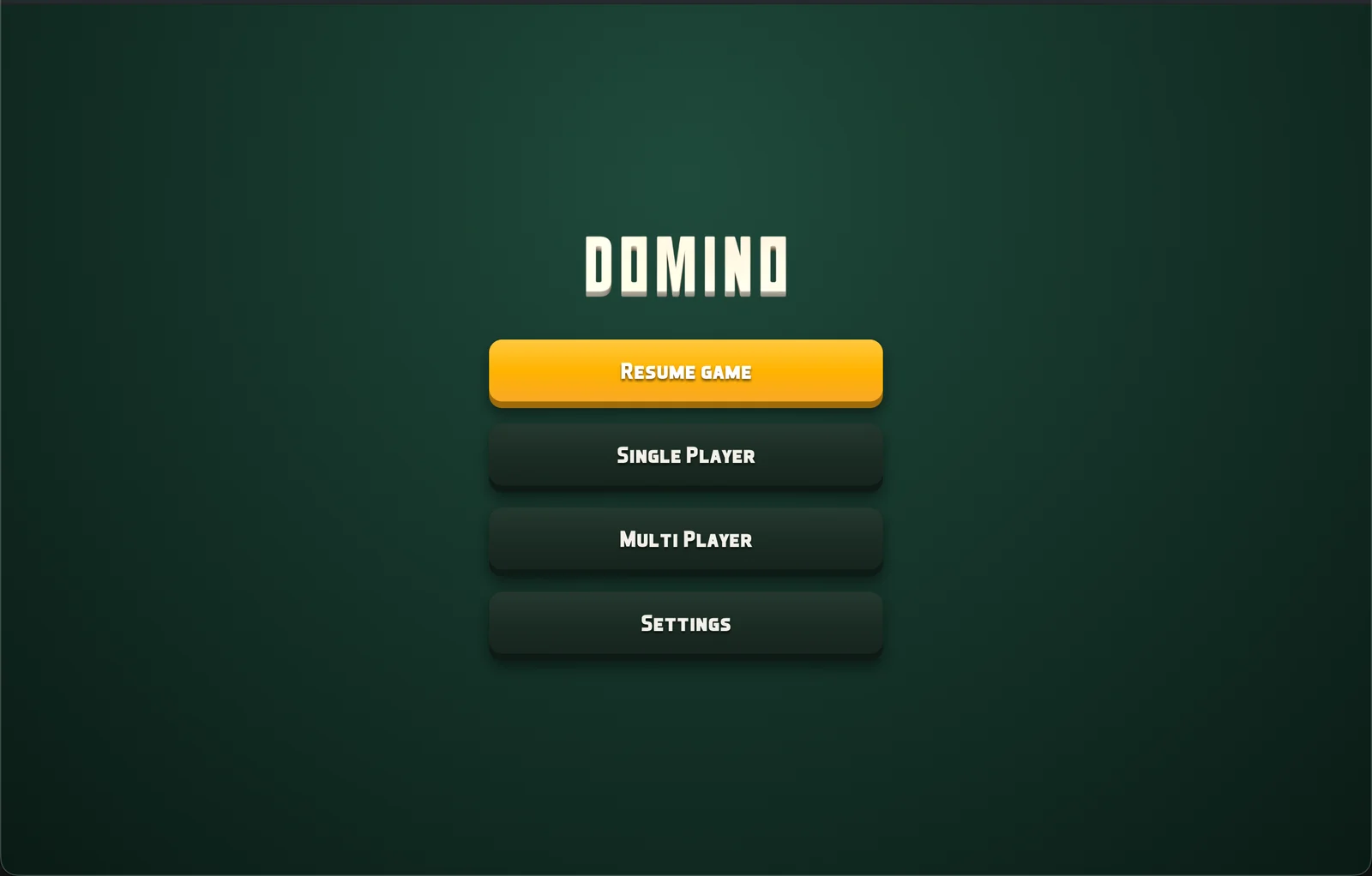
Your table, your agreements
- Private roomscreate a room, share the code, deal the tiles. The room plays by the host's rule set.
- Quick matchone tap to join an open table.
- Computers fill the gapsstart with one friend at a table for four; the rest of the seats are taken.
- Reconnect safelydropped connection? Your seat waits for you and the match carries on where it stopped.
- No peekingthe other hands never reach your device, so there is nothing on it to cheat with.
Platforms
Domino is free on Windows and Linux, and out on the App Store, Google Play and the Mac App Store.
iPhone & iPad
iOS 15 or later
App StoreAndroid
Phones and tablets
Google PlayMac
macOS 10.15 Catalina or later
Mac App StoreWindows
Windows 10 or later · free, full game
DownloadLinux
x86_64 · Flatpak or AppImage
FlatpakAppImage
The Windows build includes Master, premium felts, custom rules and hosting online rooms — no purchase required. Questions? Contact support.