Forty agreements
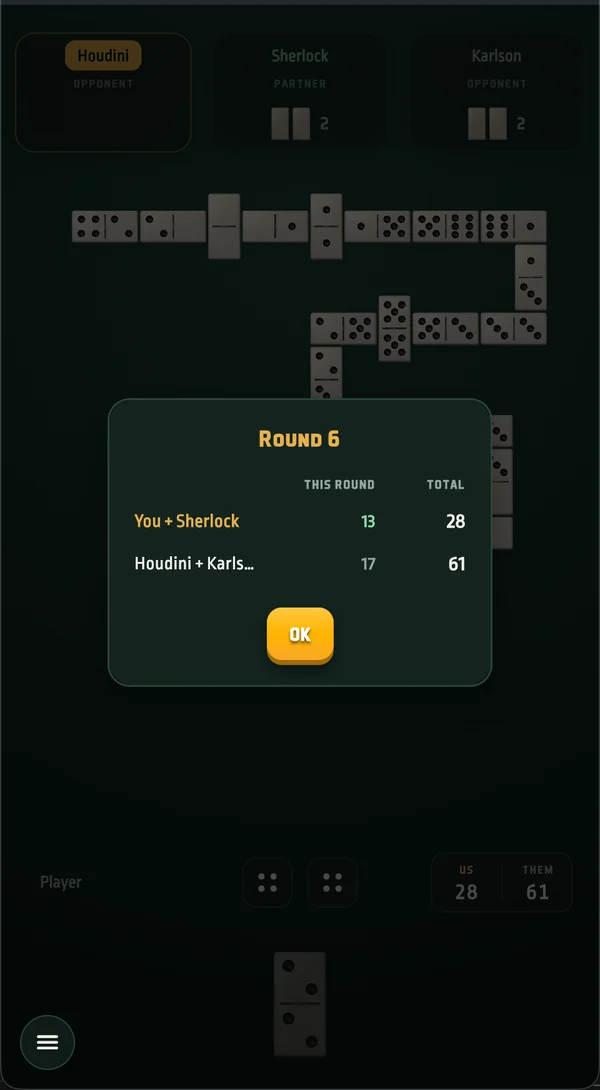
Who opens and with what, whether there is a boneyard and how you draw from it, what a double does, when a blocked round ends, what it scores, and who wins. Change any of them, save the result as your own set, and the game says up front when two rules cannot both be true.
Opponents that pay attention
Four levels. The top two remember that you passed while the ends showed a four and a two, work out what can still be in the boneyard, and play the last few tiles out exactly rather than hopefully.
Online multiplayer
Create a private room and share the code, or hit Quick Match. Empty seats are filled with computer players, so the game always starts.
Provably fair deals
In multiplayer the server publishes a cryptographic hash of the shuffle before the deal and reveals the seed afterwards, so you can check for yourself that no hand was rigged.
Two to four players
Two, three, four — or four in two pairs sitting opposite each other, which is how Kozyol is played and how the scoring turns into us and them.
No account, no fuss
Single-player works fully offline and saves after every move, so a match survives a closed app. Multiplayer needs a nickname and nothing else.
Reads on a phone
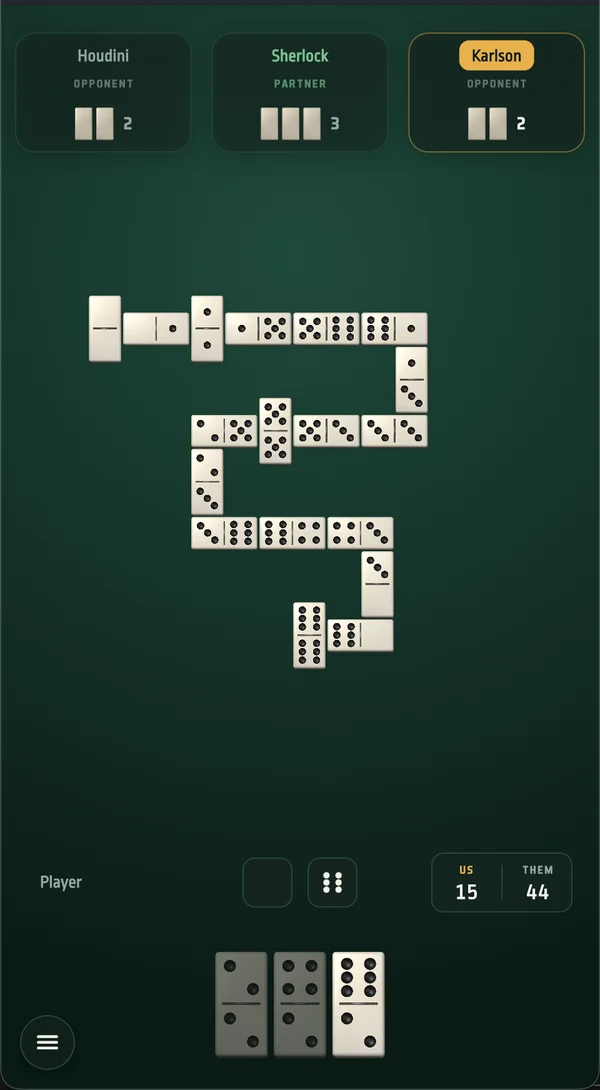
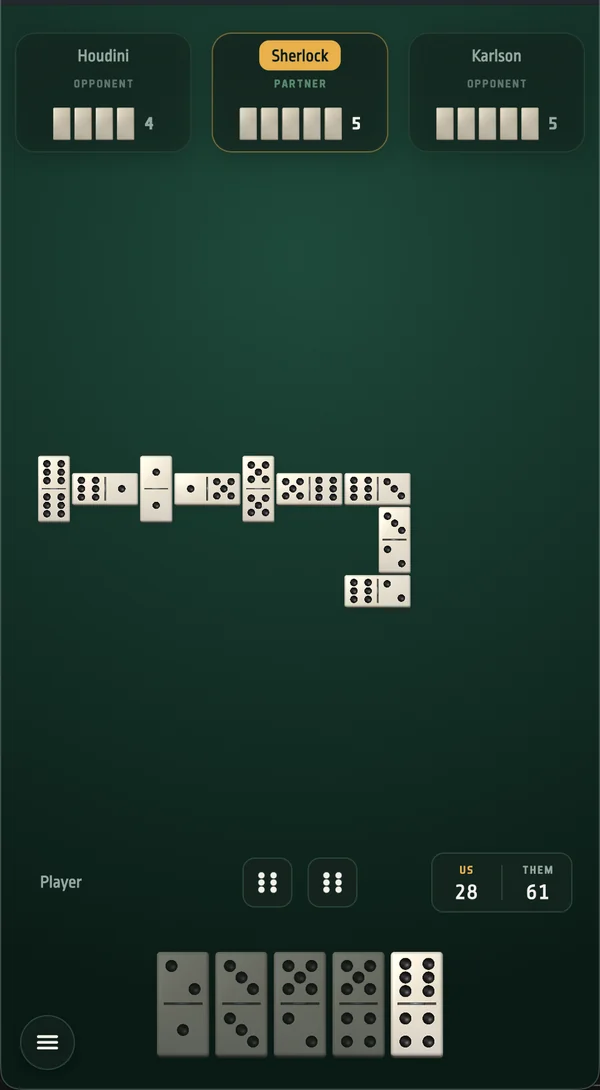
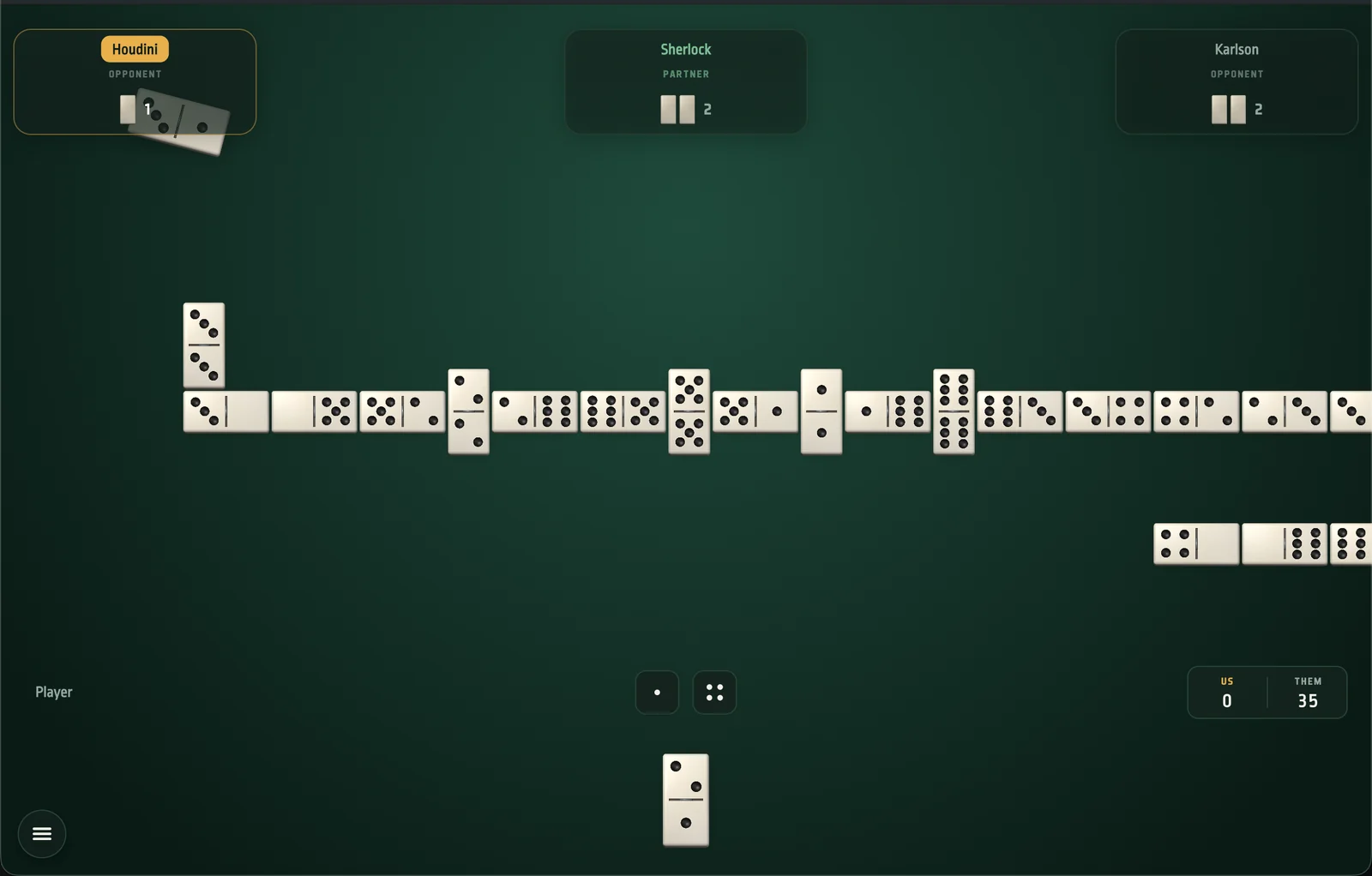
A long chain folds to fit the screen you have, and every open end is also a button along the bottom — so on a small screen the board can be scenery and the strip can be the game.
English and Russian
Interface and rules in both languages. The game takes your device language unless you pick one yourself.
 Domino